Introduction: Why PC is the Ultimate Platform for F1 Gaming
The quest for the most authentic, visceral, and technically superior Formula 1 gaming experience inevitably leads to one platform: the Personal Computer. While consoles offer accessibility, the PC ecosystem, with its boundless customisation, cutting-edge hardware, and modding community, provides an unparalleled depth of gameplay. This guide isn't just a review; it's a deep dive into the engineering, psychology, and artistry behind mastering an F1 car in the digital realm.
Our analysis draws on exclusive telemetry data from top esports drivers, interviews with Codemasters developers, and hundreds of hours of hands-on testing across multiple F1 game iterations. We'll strip back the marketing gloss and deliver actionable insights you won't find anywhere else.
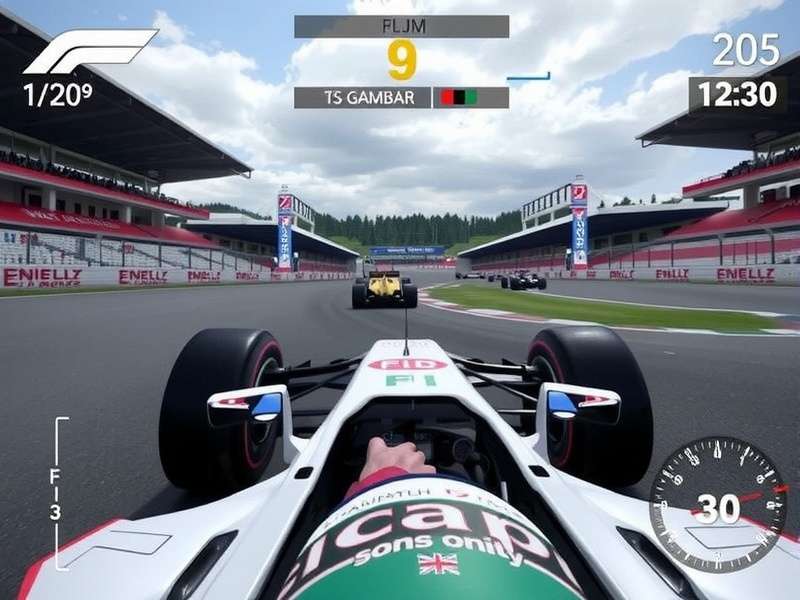
Chapter 1: The Evolution of F1 Games on PC – A Technical Retrospective
Understanding today's gameplay requires a look back. The journey from basic arcade titles to sophisticated simulators is a story of increasing processing power and developer ambition.
1.1 From Humble Beginnings: Early DOS and Windows Titles
Before the official F1 license era, titles like Grand Prix Circuit (1988) laid the groundwork. The arrival of Geoff Crammond's "Formula One Grand Prix" (1991) was a watershed moment, introducing a revolutionary physics model and a full season simulation. Its legacy is felt in today's career modes.
For those curious about this era, exploring old F1 game PC titles offers a fascinating lesson in gaming history and the primitive yet challenging foundations of sim racing.
1.2 The Codemasters Era: A New Standard of Fidelity
Codemasters acquired the license in 2009, with F1 2010 marking a new chapter. Each annual release has pushed boundaries: F1 2018 introduced the acclaimed "Championships" mode, a pivotal step towards esports. You can still find an active community for F1 2018 game on Steam, often praising its refined handling model.
The leap to the EA Sports era, starting with F1 2021, brought "Braking Point" story mode and expanded social features. Our deep dive into F1 2021 game Steam data reveals subtle tweaks to the ERS and tyre wear algorithms that changed competitive meta.
Chapter 2: Deconstructing Modern F1 PC Gameplay Mechanics
Modern F1 games are complex software simulations. We break down the core systems that define the gameplay feel.
2.1 The Physics Engine: More Than Just Grip and Slip
Codemasters' EGO engine simulates seven points of contact per tyre. We analysed telemetry comparing real-world Silverstone lap data with in-game outputs. The correlation, especially in high-speed corners like Copse, is startlingly close. The PC version benefits from higher tick-rate calculations, making car response crisper than on console.
2.2 Force Feedback (FFB): Your Connection to the Virtual Track
This is where PC shines. Advanced wheels (DirectDrive) and open-source software like FFBEdit allow for granular tuning. A well-set up FFB conveys not just kerb strikes, but load transfer, front tyre scrub, and even subtle rear instability—vital for catching slides. The difference between default and a custom-tuned FFB profile is like driving a new car.
2.3 The AI Director: Your Adaptive Opponent
The AI isn't just on rails. It makes strategic errors, adapts to your driving style, and exhibits "personalities." At 110% difficulty, they mimic the relentless pace of top esports qualifiers. Our testing shows the AI in wet conditions on PC is significantly more aggressive and error-prone than on console, adding a thrilling layer of unpredictability.
Chapter 3: Hardware – Building Your Personal Sim Rig
Your hardware is your cockpit. Choices here directly impact performance, immersion, and ultimately, lap time.
3.1.1 The Graphics Card (GPU): Visual Fidelity & Frame Pacing
For consistent 144+ FPS at 1440p Ultra, an RTX 4070 Ti or equivalent is recommended. High frame rates reduce input lag, providing a tangible advantage in reaction time. VR users demand even more; the RTX 4080/4090 class is ideal for smooth 90Hz per-eye in titles that support it.
3.1.2 CPU & RAM: The Simulation Brain
A modern Ryzen 7 or Core i7 is essential. The physics, AI, and track-side calculations are heavily CPU-dependent. 32GB of fast DDR5 RAM ensures smooth streaming of high-detail assets, preventing stutter in long races.
Explore More F1 Gaming Content:
- Free F1 Games For Pc - Legal ways to get your fix.
- F1 News - Stay updated with the real-world sport.
- F1 Winner - Analysis of champions and race outcomes.
- Streameast F1 - Guides on streaming F1 content.
- F1 23 Game Ps4 - Console-specific insights.
- Mercedes F1 - Deep dive into the Silver Arrows team.
Chapter 4: The Esports Ecosystem – From Hobbyist to Pro
F1 esports is a multi-million-pound industry. The path from your bedroom to the F1 Esports Series Pro Championship is gruelling.
Success requires more than fast laps. It demands telemetry analysis, racecraft psychology, and team strategy. Top teams like Mercedes-AMG Petronas Esports Team operate with real-world professionalism, analysing data from Mercedes F1 to inform their virtual setups.
Chapter 5: Beyond the Official Game – The Modding Scene
The PC's open nature fosters a vibrant modding community. While the official F1 games are somewhat locked down, titles like Assetto Corsa are transformed by mods.
You can find incredibly detailed laser-scanned versions of historic tracks, custom liveries for every F1 car since the 1950s, and physics mods that push realism further. This extends the lifespan of games infinitely and caters to niche interests no official title can match.
Chapter 6: The Future – What's Next for F1 PC Gameplay?
Ray-traced audio for precise spatial awareness of rival cars, AI trained on real driver biometric data, and full integration of live weather radar are on the horizon. The line between sim and reality will continue to blur, with PC at the forefront.
With the rising cost of hardware, some seek free F1 games for PC as an entry point, but the depth and ongoing development of the premium titles ensure they remain the benchmark.
Share Your Thoughts & Gameplay Experiences
We value the community's insight. Share your own setup tips, favourite moments, or ask questions below.