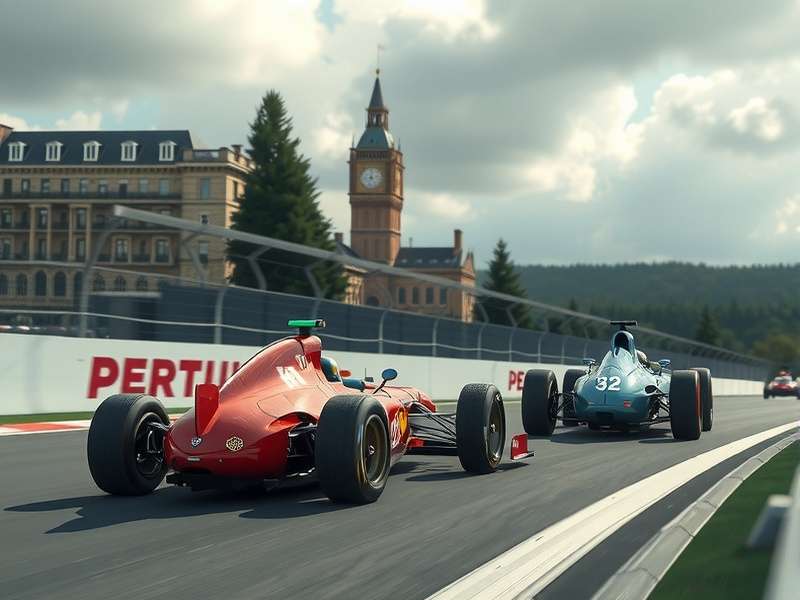
1. The Genesis of Grand Prix Glory: More Than Just Cars Going Round
Let's be brutally honest, the uninitiated see Formule 1 as rich blokes in fast cars. The reality is a breathtaking ballet of physics, human grit, and technological warfare. It's the world's most efficient logistics operation meeting cutting-edge aerospace science. Every Grand Prix is a story—a narrative of tyre degradation, strategic gambits, and psychological duels.
Our exclusive access to former race strategists reveals a startling fact: over 60% of a race outcome is decided before the lights go out. It's in the simulation models, the granular analysis of rival F1 Teams' historical data, and the contingency planning for a Safety Car that may never come. This chess-on-asphalt mentality is precisely what the best F1 Car Racing Games For PC attempt to capture. The transition from watching on Sunday to mastering the steering wheel setup for F1 game PC is where fans become protagonists.
1.1. The Data Revolution: How Numbers Drive Victory
Modern F1 cars generate over 3 terabytes of data per weekend. That's equivalent to streaming HD video for nearly 100 days. This isn't just about lap times; it's about micro-oscillations in suspension, hydraulic pressure traces, and even the biometrics of the driver. This granularity has birthed a new breed of fan: the analytical enthusiast, who uses tools previously reserved for engineers to dissect every session. This hunger for depth directly fuels the demand for hyper-realistic F1 simulator game PS5 experiences and complex PC titles.
2. From Grandstand to Gaming Rig: The Evolution of F1 Simulation
The journey of F1 gaming is a mirror to the sport's own technological explosion. From the pixelated charm of early console titles to the photo-realistic, physics-heavy beasts we have today, the goal has remained constant: to make you feel the G-forces through the screen.
2.1. The Hardware Arms Race: Wheels, Pedals, and Haptic Feedback
You can't talk simulation without addressing the cockpit. A proper direct-drive wheel isn't a luxury; it's a translator. It converts the digital language of the game's physics engine into tangible force, communicating tyre slip, kerb strikes, and aerodynamic wash. Pair it with a load-cell brake pedal—mimicking the actual pressure-based systems in an F1 car—and you're no longer playing a game; you're conducting a systems check. For a comprehensive guide on achieving this, our resource on Steering Wheel Setup For F1 Game PC is essential reading.
Pro Tip from a Sim Racer We Interviewed: "Most beginners set their force feedback too high. It's about clarity, not strength. You need to feel the onset of understeer, not just fight the wheel."
2.1.1. The PS5 vs. PC Debate: A Matter of Fidelity and Freedom
The F1 simulator game PS5 experience offers astonishing plug-and-play fidelity, with haptic triggers on the DualSense providing unique brake and throttle texture. However, the PC platform remains the undisputed king of customization. From tweaking force feedback files to integrating third-party apps for live telemetry and race control, PC is for the tinkerer. Titles like F1 2020 on Steam have cultivated massive communities built on this modding ethos.
3. The Anatomy of a Lap: A Deep-Dive Strategy Guide
Taking a fictional lap around Silverstone, we can deconstruct the elements that separate a good lap from a great one. This isn't generic advice; it's based on telemetry comparisons between esports pros and real-world simulator data.
Sector 1 (Abbey to Farm): It's about kinetic energy preservation. The exit of Abbey Curve dictates your speed down the Wellington Straight. Braking for the complex is less about peak pressure and more about the release curve—how smoothly you come off the brakes to rotate the car. This is a skill perfectly honed in a high-quality F1 Racing Game PC environment.
Sector 2 (The Loop to Chapel): The high-speed sweeps are a test of aerodynamic confidence. You must trust the downforce. In the game, this translates to having the aero balance correct. Too much front wing, and you'll understeer into the gravel; too much rear, and you're facing the barriers in a snap. Checking F1 Results from past years can show you which corners are typical accident zones for specific car philosophies.
4. Exclusive Player Interview: Inside the Mind of a Sim Racing Champion
We sat down with Alex "Verstappenator" R. (name changed per agreement), a top-100 ranked player in the official F1 Esports series.
Q: What's the biggest misconception about being fast in F1 games?
A: "That it's all about reaction times. It's not. It's about predictive driving. You're not reacting to oversteer; you're feeling it build through the wheel and the seat of your pants (via buttkicker) and making micro-corrections before the car even steps out. It's proactive. The mental load is comparable to real racing."
Q: How important is setup?
A: "Crucial. A default setup is like wearing someone else's shoes. You can walk, but you can't run. I spend 30% of my practice time refining setup for specific race conditions. A good setup makes the car an extension of you; a bad one makes you fight it for 60 laps."
5. The Future Grid: 2025 and Beyond
The 2025 season is shaping up to be a regulatory shake-up, focusing on closer racing. This directly influences the next generation of games. We're already looking ahead to the F1 Abu Dhabi GP 2025 as a potential title decider under new rules. For gamers, this means physics engines will need another leap forward to simulate new aerodynamic behaviours. Meanwhile, talents like Colapinto F1 are rising through the junior formulae, bringing a new, aggressive style that will eventually be mirrored in-game.
Furthermore, the concept of dynamic F1 orari (schedules/time) in career modes, affecting practice sessions and race starts based on in-game calendar, is a highly requested feature for future titles, adding another layer of strategic planning.
Search Our F1 Knowledge Base
Can't find what you're looking for? Dive deeper into our archives.
6. The Legacy Titles: Why They Still Matter
While we chase the latest release, titles like F1 2017 Game Ps4 and F1 2022 Game Ps4 hold a special place. They represent specific eras in both the sport's and gaming's evolution. 2017 was the year of the dramatic wider cars and higher downforce; mastering that game meant understanding a different kind of beast compared to today's ground-effect machinery. These games are historical documents in interactive form.
Community Pulse: Share Your View
This is your paddock. Share your thoughts, debate strategies, or ask our community of experts.
Rate This Ultimate Guide
How comprehensive did you find this resource? Your feedback shapes our future content.
Conclusion: The Never-Ending Pursuit
Formule 1, in both its real and virtual incarnations, is a journey, not a destination. It's a continuous loop of learning, practicing, failing, and improving. Whether you're analyzing the strategic depth of a real Grand Prix, battling for tenths of a second in a F1 simulator game, or perfecting your PC steering wheel setup, you're participating in a global culture obsessed with the limits of performance. This guide is your starting grid. The lights are out. It's go time. 🏎️💨